The 2026 Partial Eclipse
I remember the 1999 solar eclipse very well. I was living in Haworth at the time and, while we only had a partial eclipse there, Twenty seven years and one day later, we were treated to another partial eclipse. In ’99, the sky over Haworth was a little hazy so it wasn’t perfectly visible. Our plan to project the eclipse through a sheet of paper onto the ground didn’t work very well. We did get some effect with a cullender, I remember, and that was quite cool. Thinking about it now, it might have been nice to go back to Haworth to witness the event again, that I’d shared in 1999 with my mum. In fact, though, the eclipse wouldn’t have been visible this time from that exact location (in the street outside my parents’ home) as it happened at a different time of the day, this time close to sunset and so behind Penistone Hill that rises behind the village.
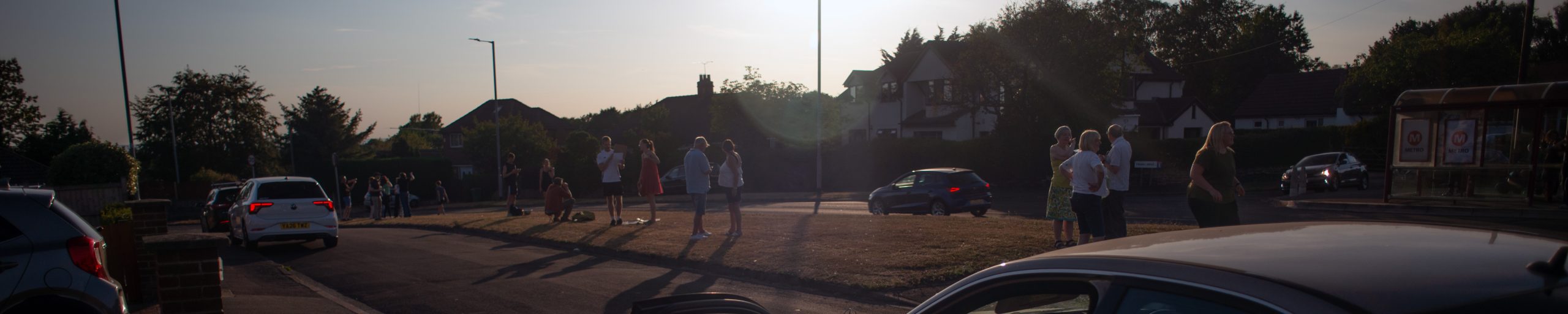
This year, living in Leeds, it was easy again to get a view and we were fortunate to have a reasonably clear sky again. Twice in two and a half decades! Woohoo! 😉 The eclipse was due to begin around 6:30pm in our area, so Sheryl was fortunate to not be stuck on a bus home from work. She got off at mine and we picked up her son Jake on the way to the top of the hill. We were comfortably in position long before the eclipse maximum. The sun and moon were only at around 12.6° elevation, so there was quite a bit of atmosphere to cut through, but very fortunately there was not too much cloud to obstruct the event.
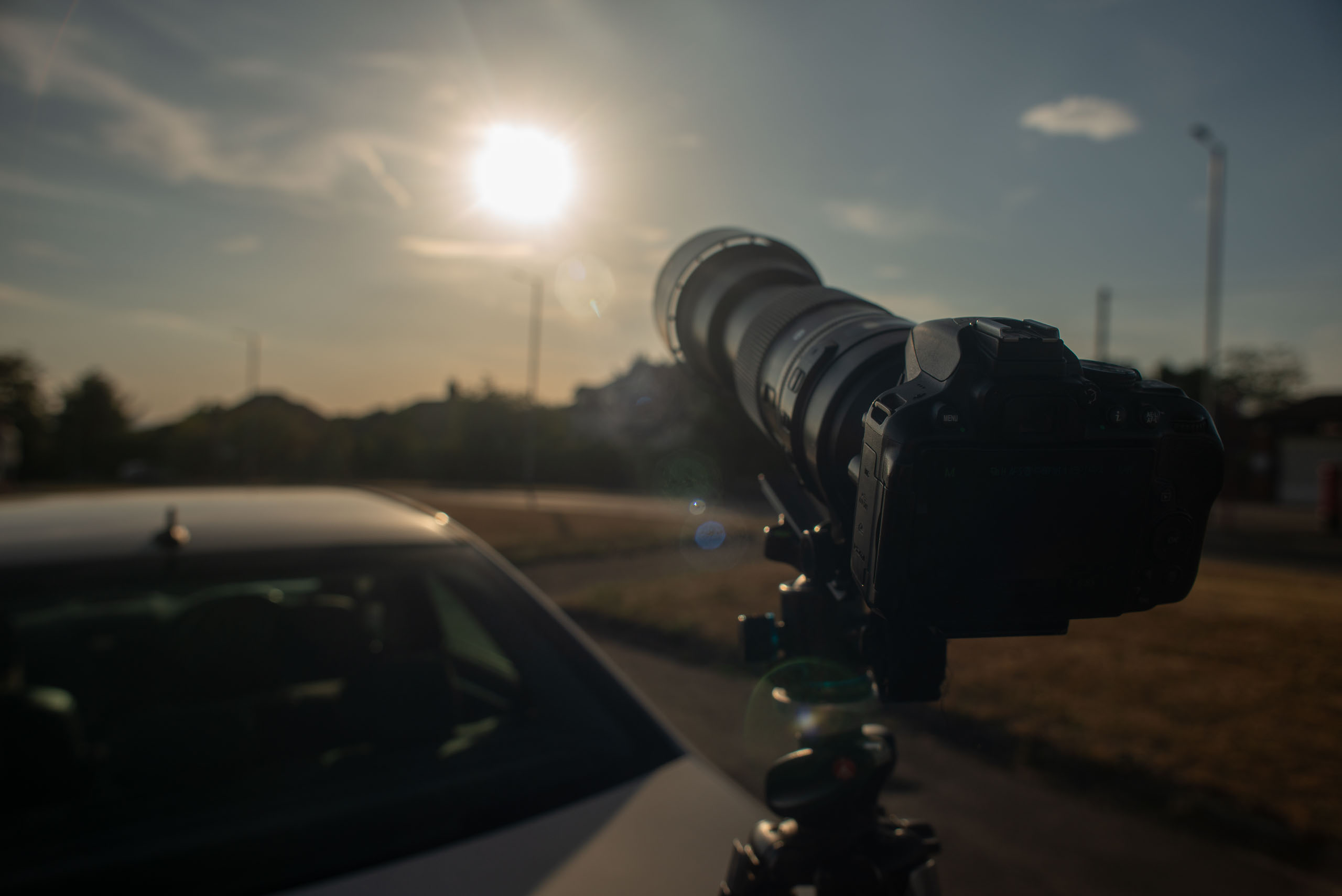
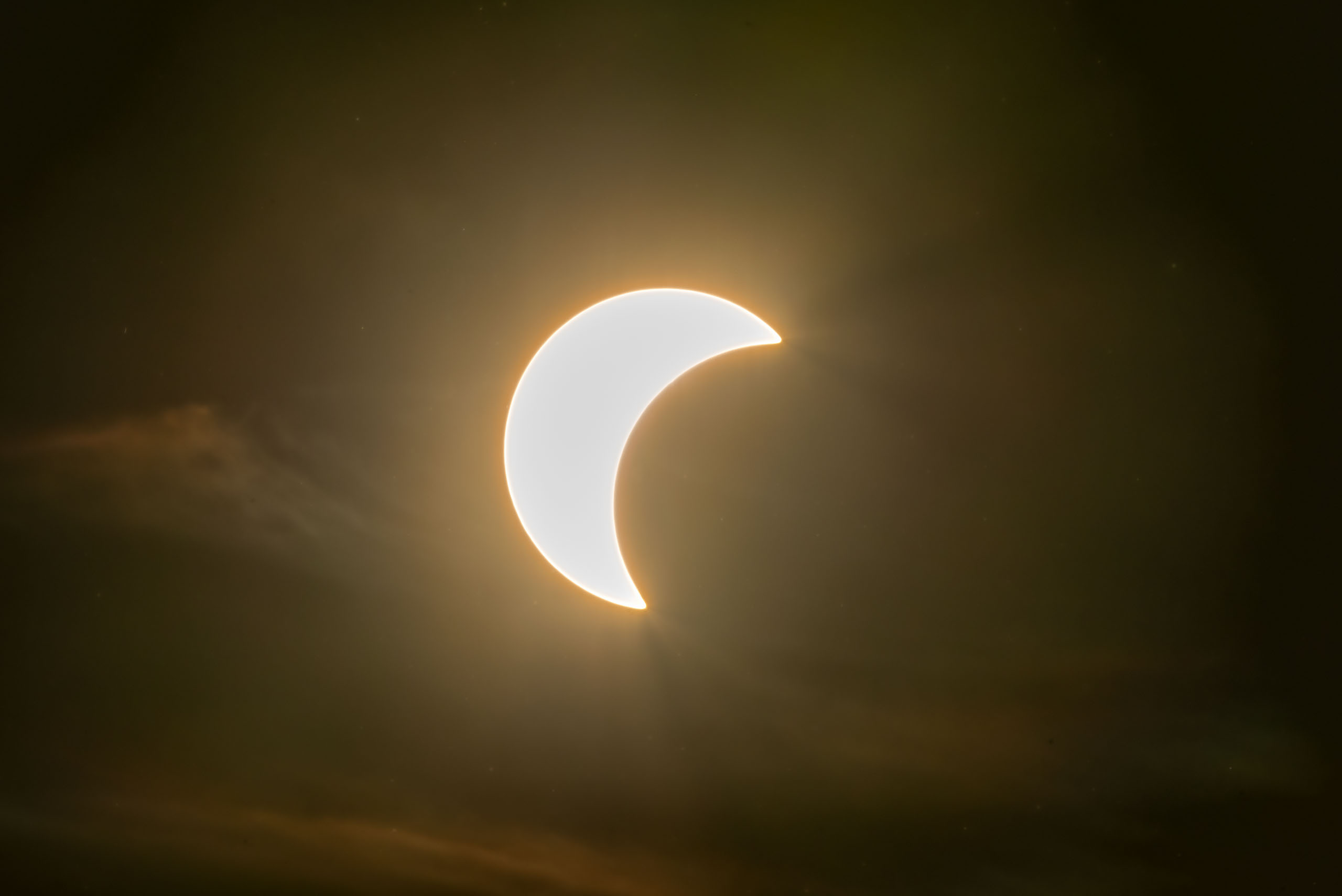
I shot quite a few photos as the eclipse began to show, but without a solar filter I was struggling to get an exposure with the D5300. Its maximum shutter speed of 1/4000th of a second at f/22 with an ISO of 100 was still too slow to cut down on the light sufficiently to get a correctly exposed (read: not terribly over-exposed) shot of the sun. Being far too bright for the autofocus system to cope, I couldn’t get an in-focus image of the sun without switching to manual focus and obviously I couldn’t shoot through the viewfinder owing to the sun’s brightness. I was shooting in Live View instead. Eventually I abandoned the D5300 in favour of the D800. Although the crop factor of the D5300 could get me a narrower field of view (apparent reach), it didn’t mean anything if I couldn’t get a shot exposed within tolerances. The D800 could save an extra stop of light shooting at 1/8000th of a second and I could save another stop of light by shooting at ISO50.
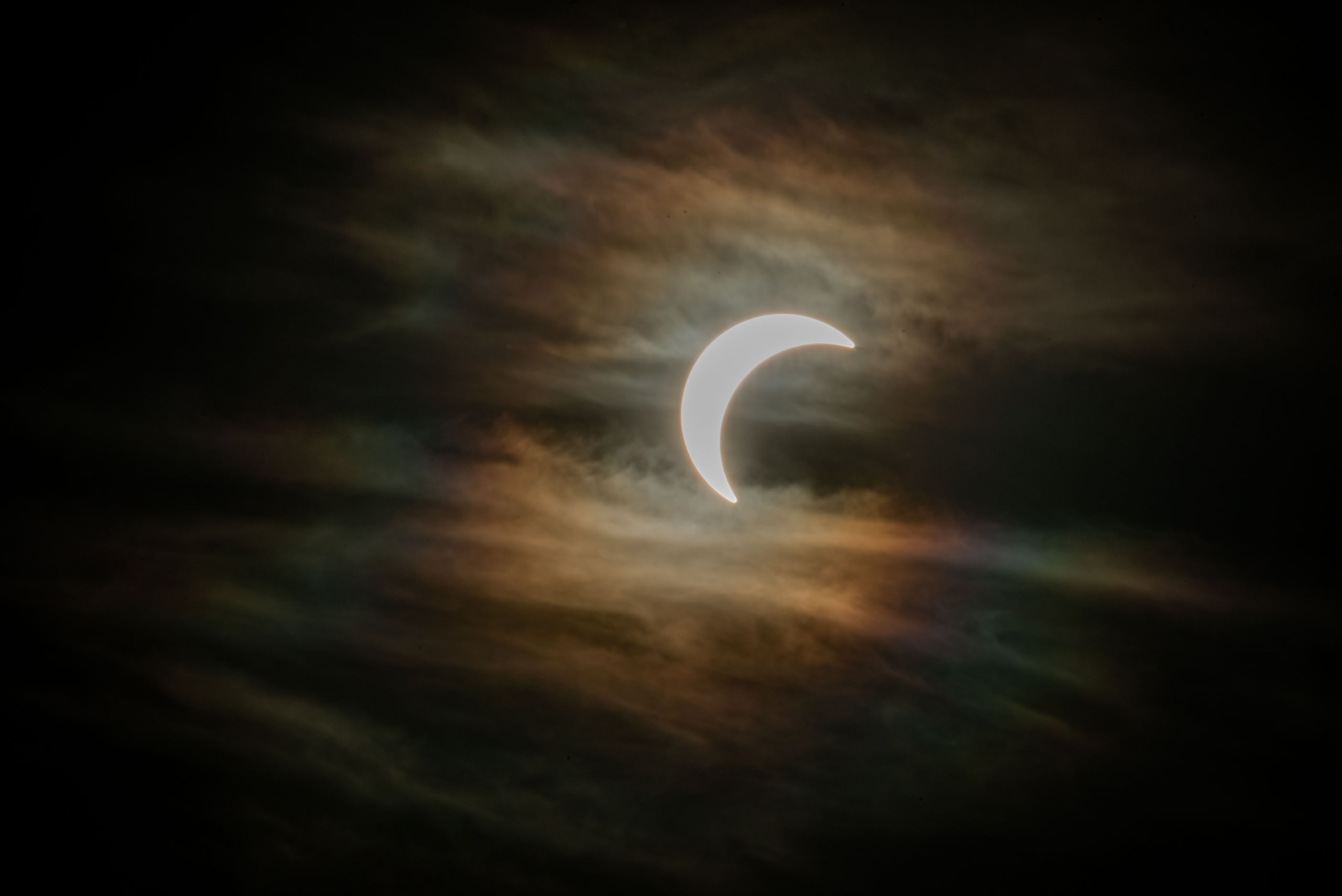
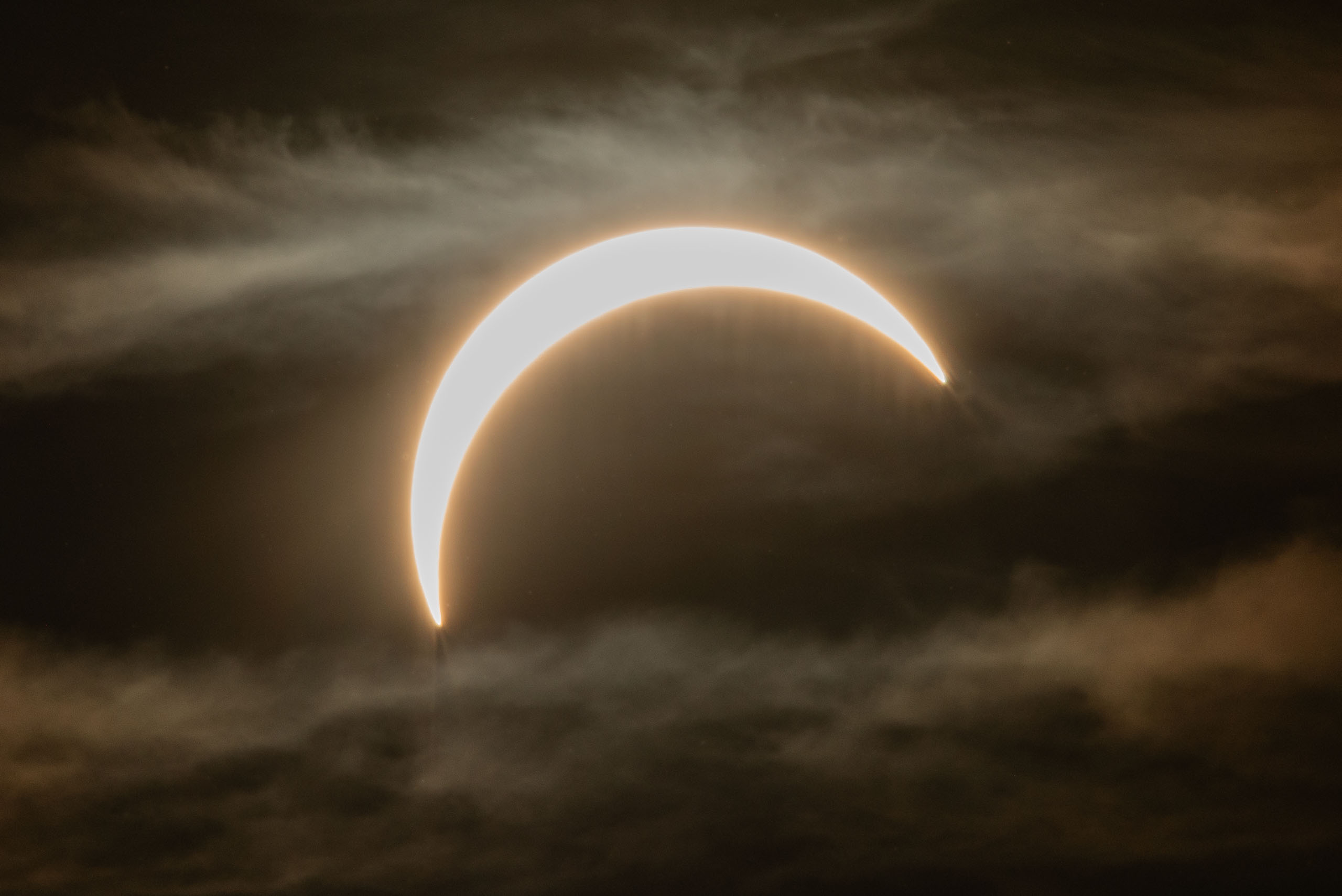
In Post, using HDR RAW editing, I was able to capture an exposure that looked pretty okay. Unfortunately, JPG files don’t support HDR exposures and so it’s impossible to share an image that looks as good as it looks on my HDR-capable monitor.
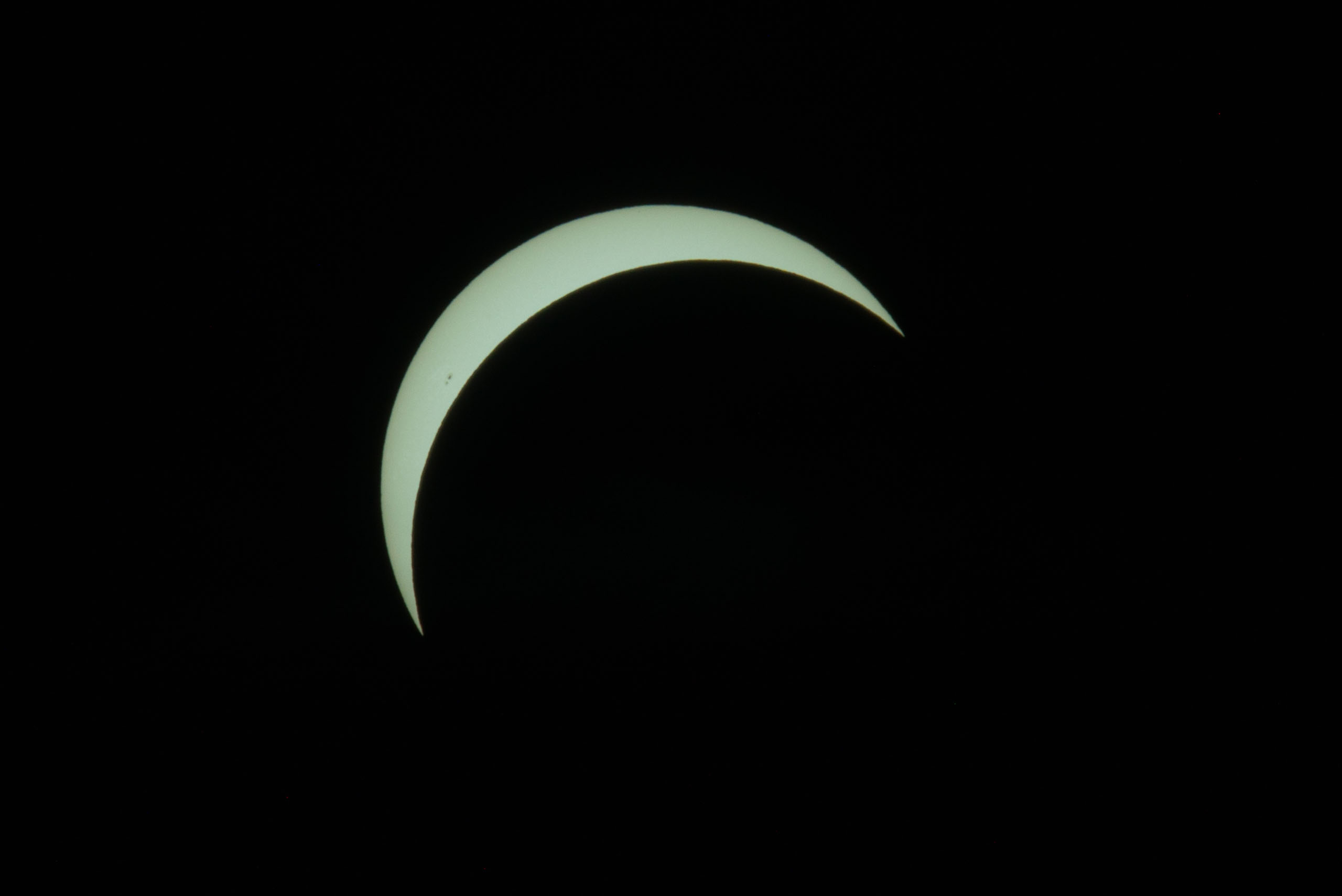
Using a “Big Stopper” 10-stop ND filter (ND1000), I was able to capture a comfortably under-exposed image of the eclipse close to its peak, which actually shows the presence of a sun spot on the left side of the sun. I’ve never managed to capture this before, so I’m quite excited by it. When I first got the image into the computer, I assumed it was dirt on the sensor but in fact it’s consistent across multiple images, despite the camera moving around a little between exposures, so the smudge must definitely be on the sun itself. Score! My ND1000 filter thread is only 77mm and the filter thread on the Sigma is 95mm, so to take the shot I had to hold the filter in front of the lens and shoot it that way. Still, I got the shot! 🙂